نظرة عامة
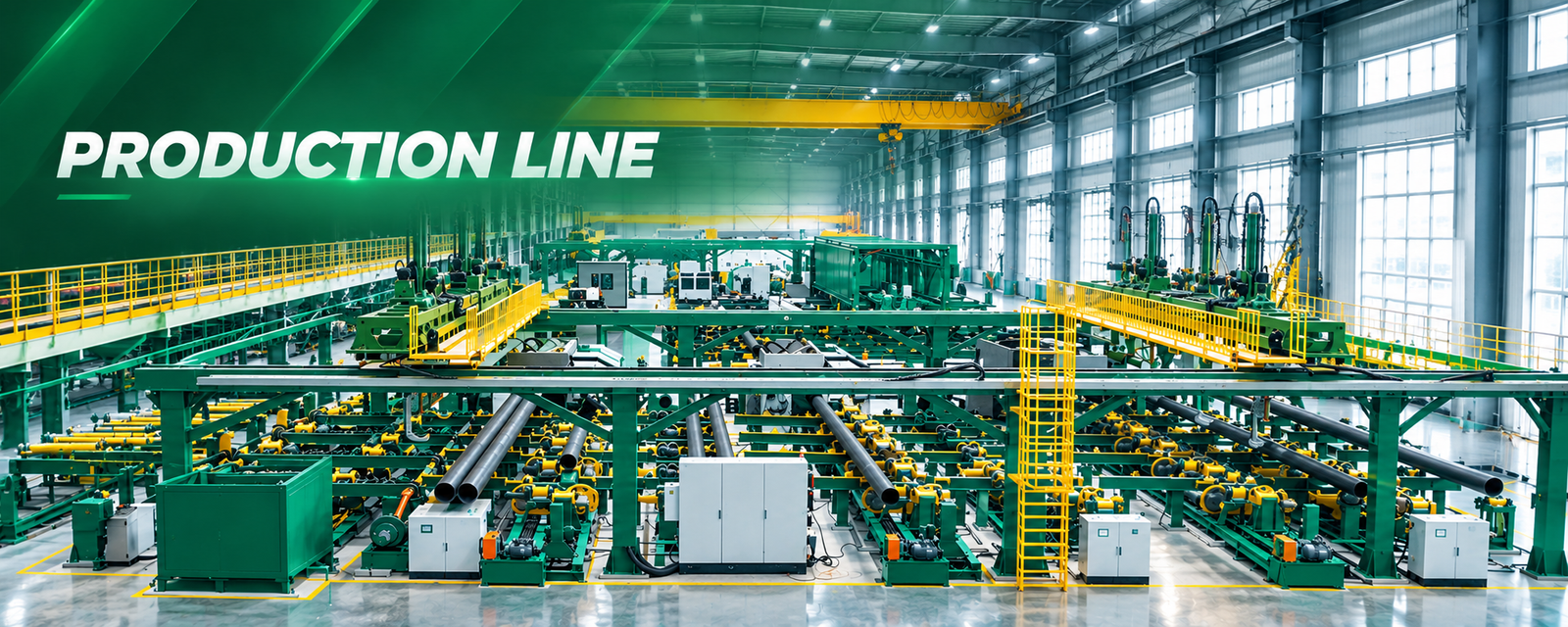
OCTG threading auxiliary equipment refers to all supporting mechanical, electrical, hydraulic, and detection devices that assist core CNC threading machines in completing standardized pipe thread processing. Unlike main equipment that directly completes thread cutting and forming, auxiliary systems undertake material handling, process auxiliary support, quality inspection, environmental purification, and safety protection work throughout the production cycle.
High-quality API standard OCTG threading accessories can effectively solve common production pain points including uneven pipe positioning, thread burr residue, insufficient cooling lubrication, undetected tiny thread defects, and low automated handling efficiency. For modern intelligent OCTG production lines, auxiliary equipment is no longer a dispensable accessory but an indispensable core component that restricts the overall production performance of the line. It is an important guarantee for enterprises to produce high-precision premium OCTG threads and pass international oilfield product certification.
1.Complete Composition of OCTG Threading Production Line Auxiliary Equipment
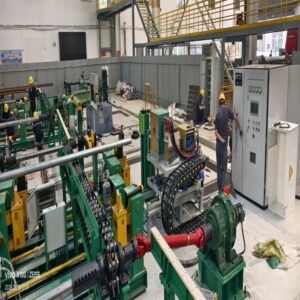
According to the production process sequence and functional division, the auxiliary equipment of a standard automated OCTG threading production line can be divided into six core modules: pipe handling and feeding auxiliary system, threading process auxiliary equipment, cleaning and deburring equipment, quality inspection and testing auxiliary devices, hydraulic and cooling lubrication system, and finished product protection and marking equipment. Each module contains multiple professional devices to cover all production links.
1.1 Pipe Handling & Feeding Auxiliary System
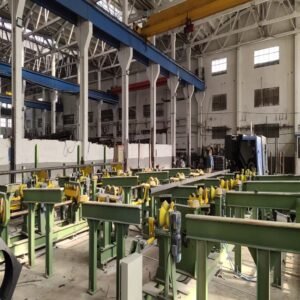
The handling and feeding system is the starting link of the OCTG threading production line, responsible for stable transportation, precise positioning, and automatic feeding of steel pipes and couplings. It is the foundation to ensure continuous and stable operation of the threading process. The core equipment includes pipe conveying roller tables, pipe pre-alignment units, gantry manipulators, rotating roller supports, step-beam lifting and shifting mechanisms, and pipe flipping devices.
The pipe pre-alignment unit corrects the bending and positional deviation of raw OCTG pipes, ensuring that the pipe axis is completely parallel to the threading machine spindle, which avoids thread deviation and uneven cutting caused by pipe tilt during processing. The servo feeding device and gantry manipulator realize automatic loading and unloading of pipes, replacing traditional manual handling, greatly improving feeding accuracy and production efficiency. The rotating roller support provides stable dynamic support for long and heavy OCTG pipes during threading, preventing pipe vibration and sagging that affect thread precision. The pipe flipping device realizes automatic end switching of pipes, completing bidirectional threading of pipe bodies without manual intervention.
1.2 Threading Process Auxiliary Equipment
This module of oil country tubular goods threading supporting equipment directly participates in the threading processing process, providing stable processing conditions for core threading machines and ensuring the consistency and precision of thread forming. Key equipment includes wedge roller bucking units, pneumatic clamping chucks, hydraulic power units, and spindle auxiliary positioning devices.
The wedge roller bucking unit is the core auxiliary equipment for thread assembly, specially used for high-speed assembly of API standard casing and tubing threads. It supports automatic torque monitoring and turn counting, realizing precise matching of thread assembly tightness, and can synchronize data with the testing system to form complete product processing traceability records. The high-precision pneumatic air chuck has self-centering and adaptive clamping functions, with built-in pressure maintenance valves to ensure stable clamping force during high-speed threading, avoiding pipe displacement and thread damage caused by pressure fluctuation. The independent hydraulic power unit provides stable power output for the threading machine’s feeding, clamping, and shifting actions, ensuring the stability of the processing process under long-term high-load operation.
1.3 Automatic Cleaning & Deburring Equipment
Thread cleaning and deburring are key processes to eliminate processing defects and improve thread surface quality. The main equipment includes automatic pipe cleaning devices, thread deburring machines, vacuum chip removal systems, and coupling blowing cleaning devices. After OCTG pipe threading processing, a large number of metal chips, cooling oil residues, and burrs remain on the thread surface and inner wall. If not cleaned in time, these impurities will cause thread wear, poor sealing, and inaccurate detection results, seriously affecting the service life of oil pipes.
The integrated vacuum cleaning system comprehensively removes internal and external debris and residual coolant of the pipe, while the special thread deburring device polishes the first thread and sharp edges to ensure smooth thread transition and meet API standard surface finish requirements. The automatic coupling blowing cleaning device performs targeted cleaning on coupling threads, thoroughly removing tiny metal particles that are difficult to clean manually, effectively avoiding thread jamming and sealing failure during field assembly.
1.4 Quality Inspection & Testing Auxiliary Devices
Quality inspection auxiliary equipment undertakes the full-process quality control of OCTG threading products, covering dimensional detection, defect detection, and pressure resistance testing. The core equipment includes thread inspection benches, magnetic particle inspection (MPI) auxiliary units, automatic thread gauge systems, and hydrostatic testing machines.
The professional thread checking bench is used for manual and precise sampling inspection of thread pitch, tooth height, and taper, matching with high-precision measuring tools to verify thread dimensional accuracy. The MPI auxiliary unit assists in detecting tiny surface cracks and fatigue defects on threads, which is an important guarantee for eliminating hidden dangers of oil pipe failure in high-pressure oil and gas wells. The automatic thread inspection system equipped with high-resolution HMI realizes intelligent identification of thread defects, with higher detection efficiency and accuracy than manual inspection. The hydrostatic testing machine supports multi-station high-pressure sealing tests, completing automatic water filling, pressure holding, and drainage, and synchronizes test data with threading processing data to form a complete production quality file, meeting FAT factory acceptance standards.
1.5 Cooling, Lubrication & Chip Removal System
The cooling and lubrication system is the “protective system” of the threading production line, including emulsion cooling systems, circulating lubrication devices, chip conveyor machines, and fume extractors. High-speed OCTG threading processing will generate a lot of cutting heat and metal chips. Excessive temperature will cause tool wear and thread thermal deformation, while accumulated chips will scratch the thread surface and affect processing continuity.
The circulating emulsion cooling system continuously supplies low-temperature cutting fluid to the threading processing area, rapidly taking away cutting heat, reducing tool loss, and improving thread surface smoothness. The automatic lubrication device regularly quantifies lubricating oil for the spindle, guide rail, and transmission components of the threading machine, reducing mechanical friction failure and extending the service life of main equipment. The automatic chip conveyor centrally recycles metal chips to keep the processing environment clean, and the fume extractor removes oil fume and dust generated during processing, improving the workshop production environment and meeting industrial environmental protection standards.
1.6 Finished Product Marking & Protection Equipment
This terminal auxiliary module includes automatic pipe marking robots, T-band spraying devices, and thread protection cap assembly equipment. After passing quality inspection, OCTG pipes need permanent marking and thread protection to meet international transportation and oilfield use standards.
The intelligent marking robot automatically sprays triangle marks, specification parameters, and factory information on the pipe body and thread end, with clear and wear-resistant marks that are not easy to fade. The T-band spraying device performs anti-corrosion spraying on the thread protection area to enhance the thread’s anti-rust and anti-corrosion ability during storage and transportation. The automatic thread cap assembly equipment quickly installs plastic protection caps on pipe threads, effectively preventing thread collision deformation, dust pollution, and corrosion damage in the later stage.

2. Core Functions of Auxiliary Equipment for OCTG Threading Production Lines
As a systematic supporting system, high-precision OCTG threading line auxiliary machines work together with main threading equipment to optimize every link of production, and their core functional values are reflected in four dimensions: ensuring processing precision, improving production efficiency, stabilizing product quality, and reducing operational costs.
2.1 Guarantee Ultra-High Thread Processing Precision
OCTG threads are the key connecting part of oil and gas well tubular goods, and their precision directly determines the sealing performance and tensile strength of oil pipes, requiring strict compliance with API 5CT and premium thread standards. Single main threading equipment cannot eliminate errors caused by pipe positioning, vibration, temperature change, and burrs. Auxiliary equipment such as pre-alignment units, stable support rollers, and cooling systems effectively eliminate processing errors from external factors.
Precise positioning and support avoid thread taper deviation and tooth height inconsistency caused by pipe vibration; constant-temperature cooling prevents thread thermal deformation; post-processing deburring and finishing ensure uniform thread surface roughness. The whole set of auxiliary precision control makes the thread dimensional tolerance of finished OCTG pipes fully meet international high-standard requirements, avoiding product scrapping caused by precision deviation.
2.2 Improve Overall Production Line Automation & Capacity
A complete set of auxiliary equipment realizes fully automated operation from pipe feeding, threading auxiliary processing, cleaning and inspection to finished product protection, completely breaking the limitations of traditional manual auxiliary operation. Automatic handling equipment reduces manual intervention, shortens the single-pipe processing cycle, and realizes continuous and uninterrupted production of the threading line.
The synchronous cooperation of feeding, processing, cleaning, and testing equipment eliminates waiting time between processes. The intelligent data synchronization of bucking units and testing equipment simplifies the quality inspection and filing process, greatly improving the overall production capacity of the production line. For large-scale OCTG manufacturing enterprises, standardized auxiliary system configuration can increase the production line’s comprehensive efficiency by more than 30% and effectively shorten the production cycle of customized premium thread products.
2.3 Stabilize Product Quality & Realize Full Traceability
The matching inspection and testing auxiliary equipment realizes 100% detection of thread appearance, size, and mechanical properties, thoroughly screening unqualified products and avoiding defective products from entering the market. All processing data including threading assembly torque, hydrostatic test pressure, and defect detection results are automatically recorded and synchronized, forming independent quality files for each pipe product.
This full-process traceability system meets the quality audit requirements of international oilfield purchasers, improves product credibility, and facilitates enterprises to quickly locate and optimize production problems when individual product quality problems occur. At the same time, thread protection and anti-corrosion auxiliary equipment effectively reduce product damage rate in transportation and storage, ensuring that the factory quality of OCTG products is consistent with the delivery quality.
2.4 Reduce Production Costs & Equipment Failure Rate
The cooling lubrication system and environmental protection auxiliary equipment effectively reduce tool wear and mechanical friction loss, greatly extending the service life of core CNC threading machines and reducing equipment maintenance and replacement costs. Automatic cleaning and chip removal equipment keep the production environment clean, avoid equipment failure caused by chip accumulation and oil pollution, and reduce downtime loss caused by equipment failure.
In addition, automated auxiliary operation reduces labor input, reduces manual operation errors and product scrapping rates, and further reduces comprehensive production costs. For long-term production operation, high-quality auxiliary equipment configuration can help enterprises save nearly 25% of comprehensive operating costs every year.
3. The Strategic Value of Auxiliary Equipment for Modern OCTG Threading Production Lines
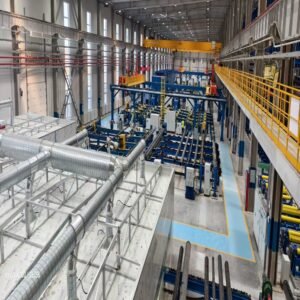
With the continuous upgrading of global oil and gas exploration and development technology, oilfield enterprises have put forward higher requirements for the precision, durability, and stability of OCTG tubular goods. Traditional single-mode threading production relying only on main equipment can no longer meet the market demand for high-standard premium thread products. Professional, intelligent, and fully matched OCTG threading production line auxiliary equipment has become a core symbol of modern high-end OCTG manufacturing factories.
Reasonable auxiliary equipment configuration can help enterprises realize standardized and intelligent production of OCTG threads, improve product consistency and international competitiveness, and smoothly pass API certification, oilfield access certification, and other international qualification audits. For export-oriented OCTG manufacturers, a complete set of standardized auxiliary production systems is an important basis for winning the trust of global purchasers and undertaking high-end customized orders.
In addition, the integrated design of energy-saving and environmental protection auxiliary equipment such as circulating cooling systems and oil fume purification systems meets the green production standards of European and American markets, helping enterprises meet international environmental protection access requirements and expand global market share.
4. Conclusion
The auxiliary equipment of the OCTG threading production line is an indispensable and important part of the oil country tubular goods threading manufacturing system, undertaking the important functions of precision guarantee, efficiency improvement, quality control, and cost reduction. From front-end material handling and process auxiliary support to back-end cleaning, inspection, and finished product protection, each set of OCTG pipe threading auxiliary equipment complements the core threading machine to build a high-efficiency, high-precision, and high-stability automated production system.
 English
 Español
 Русский
 العربية
 Français
 Português