نظرة عامة
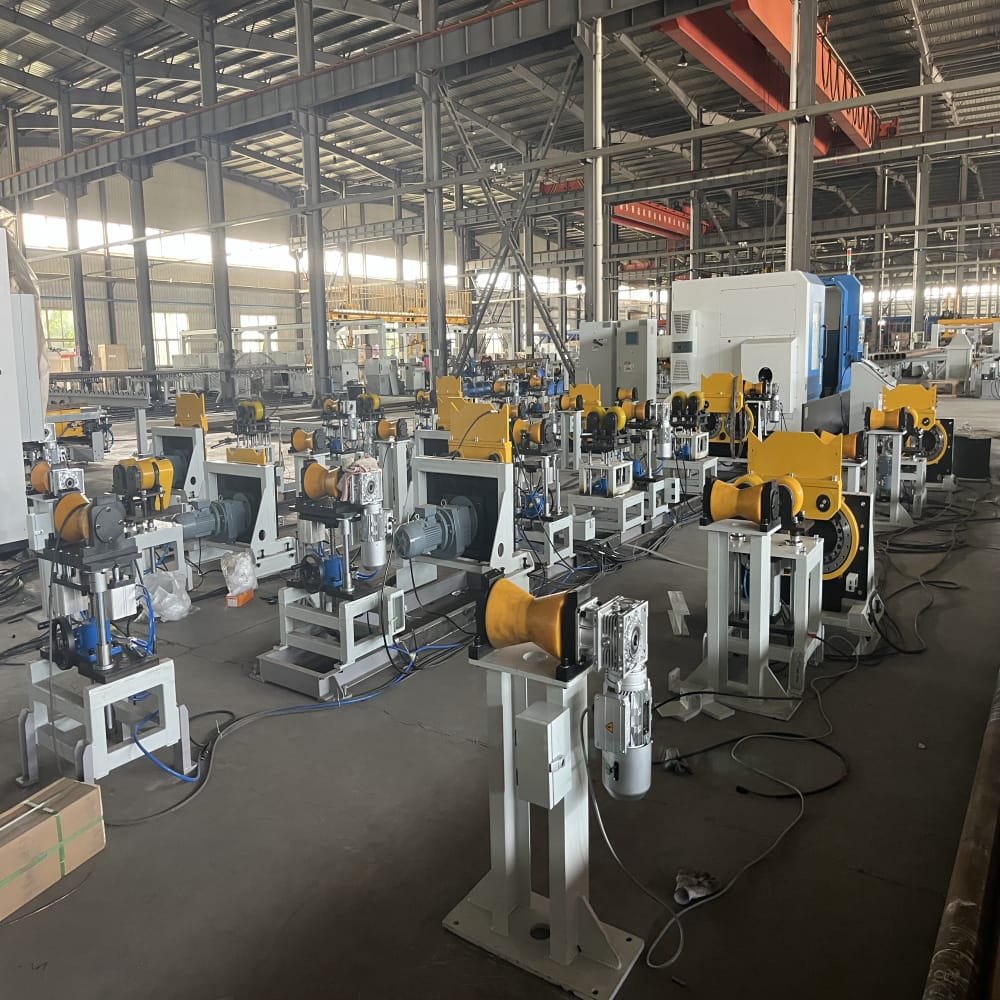
In the oil and gas industry, أنابيب حقول النفط (OCTG) products—including casing, tubing, and drill pipes—serve as the core infrastructure for onshore and offshore well drilling, extraction, and completion operations. The structural stability, sealing performance, and service life of OCTG pipes largely depend on the precision of pipe end threads, which are processed by professional OCTG threading machines. As the core precision equipment in the OCTG production line, threading machines determine the reliability of pipe connections, well safety, and overall production efficiency.
For global pipe manufacturers, oilfield equipment suppliers, and factory investors, understanding how OCTG threading machines work, their mainstream types, industrial applications, and the differences between standard API threads and premium connections/premium threads is critical to optimizing production lines and improving product competitiveness.
1. What Is an OCTG Threading Machine?
An OCTG threading machine is a specialized precision metal processing equipment designed exclusively for cutting, finishing, and shaping threads on the ends of oil and gas tubular goods. Unlike ordinary pipe threading lathes, OCTG threading machines are engineered to withstand heavy-duty processing, high precision tolerance requirements, and strict oilfield industry standards such as API 5B و API 5CT.
In the entire OCTG production line, the threading process is the final and most critical precision processing procedure after pipe straightening, cutting, chamfering, and outer surface finishing. The machine completes helical groove cutting on pipe outer walls or coupling inner walls to form standardized or customized thread structures, enabling tight mechanical connection and sealing between OCTG pipes and couplings.
Modern CNC OCTG threading machines integrate multiple functions including end face finishing, chamfering, thread cutting, deburring, and sealing surface machining, realizing one-time clamping and multi-process molding. This greatly reduces manual errors, improves processing consistency, and meets the mass production and high-precision requirements of commercial OCTG products.

2. Working Principle of OCTG Threading Machine
The core working principle of the OCTG pipe threading machine is based on precise coordinated motion between spindle rotation and tool feed, achieving high-precision helical thread cutting. The entire processing process follows standardized mechanical logic and CNC numerical control programming, ensuring accurate thread pitch, taper, depth, and profile. The detailed working process is divided into four core steps:
2.1 Precise Clamping and Positioning
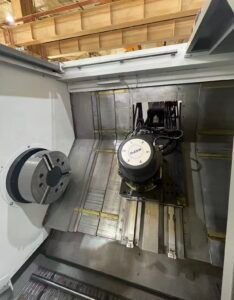
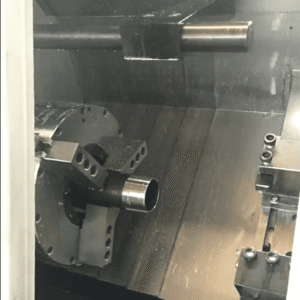
Before processing, the equipment’s multi-jaw hydraulic chuck firmly clamps the OCTG pipe or coupling blank. Most high-end OCTG threading machines adopt four-jaw uniform clamping design, which evenly distributes clamping force around the pipe body to avoid pipe deformation, displacement, or eccentricity during high-speed rotation. Accurate positioning ensures the coaxiality of the pipe body and spindle, laying a foundation for thread precision molding.
2.2 Spindle Rotation and Synchronous Tool Feed
Driven by a high-power spindle motor, the clamped pipe rotates at a constant or variable speed according to preset parameters. Meanwhile, the CNC system controls the threading tool to perform linear synchronous feed along the pipe axis. The system precisely matches the spindle rotation speed and tool feed rate to form a standard helical motion trajectory, which is the core of forming uniform thread grooves.
Different from ordinary lathes, professional OCTG threading machines support two mainstream processing modes: pipe rotation with fixed tool و tool rotation with fixed pipe, adapting to processing requirements of large-diameter heavy pipes and small-diameter high-precision tubing respectively.
2.3 Layered Thread Cutting and Profile Molding
OCTG threads (especially premium threads) have strict requirements for taper and profile accuracy, so the machine adopts layered cutting instead of one-time cutting. The tool cuts excess pipe wall material layer by layer according to programmed thread parameters (taper, pitch, tooth height). For API standard threads and premium connection threads, the system calls for different preset molding programs to ensure the thread tooth profile fully complies with industry specifications.
2.4 Finishing, Deburring and Precision Inspection
After thread cutting is completed, the equipment automatically completes end face finishing, chamfering, and thread deburring to remove sharp edges and burrs that affect assembly and sealing. High-end intelligent threading machines are also equipped with online detection systems, which real-timely monitor thread size, taper, and pitch, automatically eliminating unqualified products to ensure 100% compliance with API and premium thread standards.
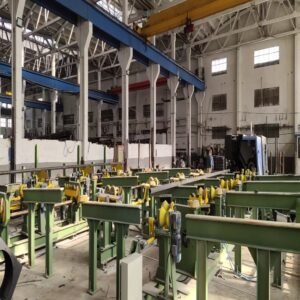
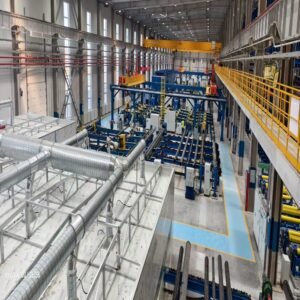
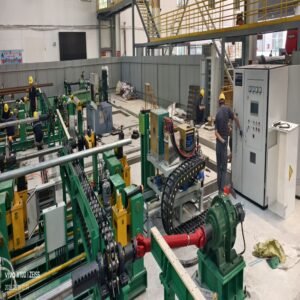
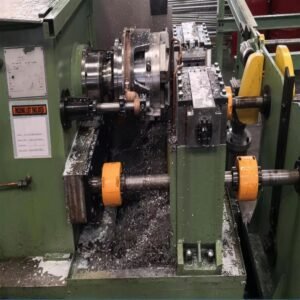
3. Main Types of OCTG Threading Machines
According to processing objects, structural design, and automation level, mainstream OCTG threading machines on the global market are divided into three categories, each with unique performance advantages and targeted application scenarios, meeting the differentiated production needs of different OCTG products.
3.1 CNC Pipe Threading Machine (For Tubing & Casing)
This is the most widely used OCTG threading equipment, specially designed for thread processing on the ends of oil casing and tubing pipes. It adopts a heavy-duty CNC structure, supports processing of multiple steel grades such as J55, N80, L80, and P110, and is compatible with pipe diameters from 2-3/8 inches to 20 inches.
The equipment features high rigidity and strong shock resistance, stable processing of tapered API standard threads and conventional premium threads. It supports one-time clamping double-end threading, with fast production rhythm and high finished product consistency, suitable for mass production of conventional oilfield OCTG pipes.
3.2 CNC Coupling Threading Machine
Specially developed for internal thread processing of OCTG couplings, this equipment focuses on high-precision internal tooth cutting of coupling blanks. Compared with pipe threading machines, it has higher requirements for internal thread coaxiality and smoothness, effectively avoiding assembly jamming and poor sealing caused by internal thread deviation.
It can process API round threads, buttress threads, and various premium connection internal threads, perfectly matching the external threads of casing and tubing pipes. It is the core supporting equipment for supporting OCTG pipe coupling production lines.
3.3 Heavy-Duty Premium Threading Machine
This is a high-end customized OCTG processing equipment, specially designed for complex premium thread connections used in deep wells, ultra-deep wells, and high-pressure and high-corrosion oil and gas fields. Compared with ordinary threading machines, it has higher spindle precision, more accurate CNC control system, and ultra-low tolerance processing capability.
It can complete processing of complex asymmetric tooth profiles, metal-to-metal sealing surfaces, and special torque shoulder structures that cannot be realized by ordinary equipment, and is dedicated to the production of high-value-added premium OCTG products.
4. What Are Premium Connection / Premium Threads?
When talking about high-end OCTG processing, premium connections (premium threads) are indispensable core concepts, which are high-performance upgraded threads that exceed conventional API standard threads. Most low-end OCTG products adopt standard API 5B threads, which have simple structures and low costs but are limited in sealing and tensile properties, unable to adapt to harsh well conditions.
Premium threads are customized high-precision thread connections optimized for extreme working conditions. Different from standard API threads with single taper and simple tooth shape, premium connections adopt optimized asymmetric tooth profiles, independent torque shoulders, and metal-to-metal rigid sealing structures, solving the pain points of poor air tightness, easy thread loosening, and low tensile strength of standard threads under high pressure, high temperature, and alternating load conditions.
4.1 Core Advantages of Premium Thread Connections
Excellent Sealing Performance: Realize metal-to-metal full sealing, completely isolate external pressure and corrosive media, effectively prevent oil and gas leakage, and adapt to high-pressure deep well and offshore oilfield operations.
Higher Mechanical Strength: Optimized tooth profile and torque shoulder structure improve tensile strength, compression resistance and anti-loosening ability, avoiding joint fracture and thread tripping during well drilling and extraction.
Strong Environmental Adaptability: Suitable for high-temperature, high-pressure, strong corrosion, and frequent assembly and disassembly working conditions, greatly extending the service life of OCTG pipes.
Good Repeat Assembly Performance: The precision structure ensures stable connection performance after multiple disassembly and assembly, reducing on-site maintenance costs.
4.2 Processing Requirements for Premium Threads
Premium threads have extremely strict precision requirements, with tolerance accuracy 2-3 times higher than standard API threads. Only professional heavy-duty premium OCTG threading machines can complete processing. The equipment needs to realize ultra-precise control of thread taper, tooth height, shoulder flatness and sealing surface smoothness, and support customized program development for different brand premium thread standards, which is the key for manufacturers to produce high-end OCTG products.
5. Industrial Applications of OCTG Threading Machines
As the core equipment of OCTG production lines,OCTG threading machines are widely used in global oil and gas equipment manufacturing, petroleum pipe processing, and oilfield engineering supporting industries, covering multiple high-demand scenarios:
أولاً, it is used for mass production of conventional oilfield casing and tubing. Relying on high-efficiency CNC threading machines, manufacturers complete standardized thread processing of various steel-grade OCTG pipes, meeting the demand for conventional onshore well drilling and conventional oil and gas extraction.
ثانيًا, it is applied to high-end oil and gas well projects such as deep wells, ultra-deep wells, offshore oilfields, and shale gas development. Supported by premium threading machines, high-precision premium connection pipes are produced, adapting to extreme working conditions and ensuring the safety and stability of complex well bore operations.
ثالثًا, it is used for supporting production of OCTG couplings and accessories. Special coupling threading machines realize precise matching of internal and external threads of pipes and couplings, improving the overall assembly efficiency and connection reliability of OCTG pipelines.
In addition, the equipment is also applicable to customized processing of special oilfield pipes, heat-resistant and corrosion-resistant alloy pipes, and engineering tubular goods, with strong production flexibility and wide industrial coverage.
6. Why Choose High-Precision CNC OCTG Threading Machines?
In the competitive global OCTG market, low-precision ordinary threading equipment can no longer meet the industry’s high-standard requirements. Upgrading to CNC OCTG threading machines with premium thread processing capability has become an inevitable trend for manufacturers to enhance competitiveness.
أولاً،, it realizes standardization and high precision of products, fully complying with API 5B, API 5CT and international premium thread specifications, helping products pass global authoritative inspections and smoothly enter European, American, Middle Eastern and Southeast Asian markets.
Second, intelligent CNC processing reduces manual intervention, improves production efficiency by more than 30% compared with traditional equipment, reduces defective rate and production cost, and improves enterprise profit margin.
Third, it supports diversified production, compatible with standard API threads and various custom premium threads, enabling enterprises to cover mid-to-high-end OCTG product lines and meet the differentiated procurement needs of global oilfield buyers.
الخلاصة
الـ OCTG threading machine is the core precision equipment that determines the quality and performance of oil country tubular goods. Its working principle of synchronous spindle rotation and tool feed ensures efficient and accurate thread processing. Different types of threading machines meet the production needs of conventional standard threads and high-end premium connections respectively. With the continuous development of global deep well and offshore oil and gas exploitation, high-precision CNC OCTG threading machines with premium thread processing capability have become the core equipment favored by global OCTG manufacturers.
For global buyers looking for reliable OCTG production line equipment, choosing a high-rigidity, high-precision, multi-functional OCTG threading machine is not only a guarantee of production efficiency, but also a key to improving product added value and market competitiveness.
 English
  Español
  Русский
  العربية
  Français
  Português