Why Hydrostatic Testing Is Indispensable for OCTG Production
Oil Country Tubular Goods (OCTG), including casing, tubing, and coupling pipes, serve as the core infrastructure for onshore and offshore oil and gas exploration, extraction, and transmission. Operating in extreme downhole environments with high pressure, high temperature, and corrosive media, OCTG products require ultra-high structural integrity and pressure resistance to avoid pipe rupture, leakage, and wellbore failure during service. Among all quality control procedures in OCTG manufacturing,hydrostatic testing is the most critical non-destructive verification process and a mandatory test specified by international authoritative standards API 5CT (for casing and tubing) and API 5L (for line pipe).
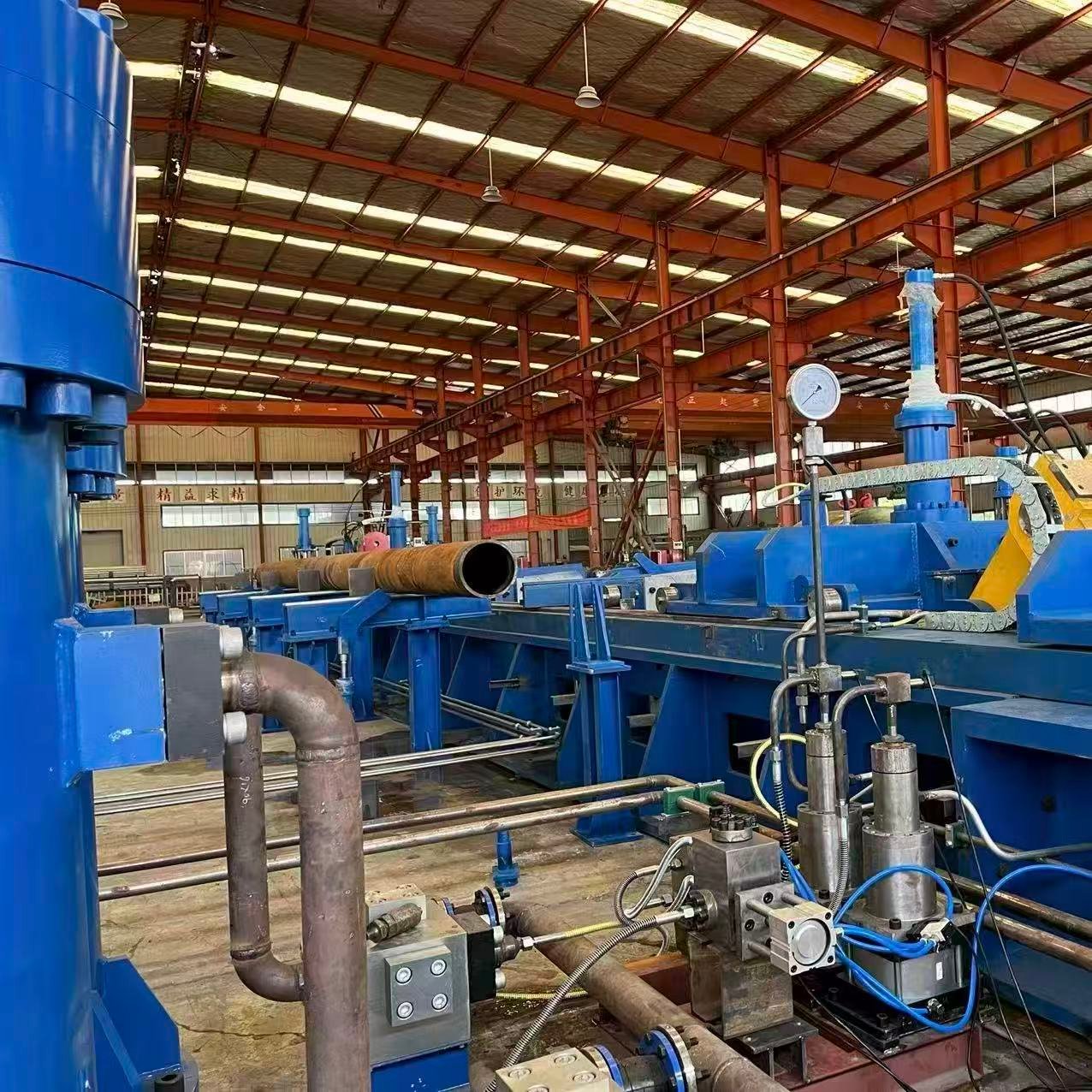
A professional OCTG hydrostatic testing machine is specially designed to perform full-cycle pressure testing for seamless and welded steel pipes. Unlike conventional pressure detection equipment, it features precise pressure control, stable pressure holding, and automatic data recording, ensuring every batch of OCTG products meets global petroleum industry safety specifications. For OCTG manufacturers, choosing a suitable hydrostatic testing machine and mastering scientific pressure selection rules directly determines product qualification rate, international certification pass rate, and market competitiveness. This blog comprehensively explains the working principle, standard operation workflow, and professional pressure selection criteria of OCTG hydrostatic testing machines, providing practical technical references for global petroleum pipe manufacturers, engineering contractors, and equipment purchasers.
Working Principle of OCTG Hydrostatic Testing Machine
The hydrostatic testing machine adopts the incompressible fluid pressure transmission principle, which is the core theoretical basis for all pipe hydrostatic testing operations. Water is used as the test medium due to its minimal compressibility, safe operation, low cost, and non-polluting characteristics. Compared with gas pressure testing, water pressure testing can accurately amplify tiny structural defects inside the pipe body without causing explosive safety risks, making it the only recognized testing method for commercial OCTG production.
The working principle can be divided into three core logical stages: pressure generation, pressure transmission, and defect verification. First, the high-pressure hydraulic system and booster pump of the equipment inject clean water into the sealed OCTG pipe body, completely exhausting internal air to eliminate pressure deviation caused by gas compression. Second, the system continuously boosts pressure to the standard-specified test value, and the incompressible water evenly transmits pressure to every position of the pipe inner wall, including pipe bodies, welds, threads, and couplings. Finally, by maintaining constant pressure for a specified period, the equipment monitors pressure changes and pipe status in real time.
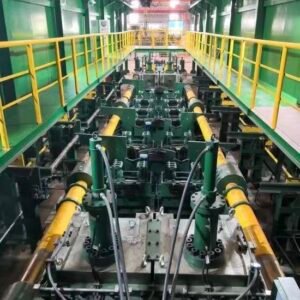
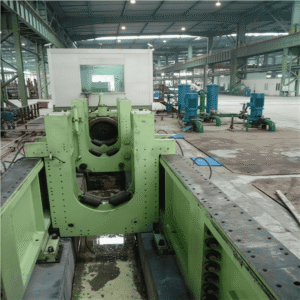
Structurally, a standard OCTG hydrostatic testing machine consists of five core systems: automatic pipe loading and sealing system, high-pressure water supply and boosting system, PLC intelligent pressure control system, real-time data monitoring and recording system, and safety protection system. The whole equipment realizes mechanical sealing of pipe ends through hydraulic clamping devices, avoiding pressure leakage caused by poor sealing. The high-precision pressure sensor supports real-time pressure sampling, with a pressure control accuracy up to ±0.1MPa, which fully meets the strict tolerance requirements of API 5CT and API 5L standards. Once there are tiny cracks, trachoma, weld defects, or thread leakage in the pipe body, the stable pressure value will drop significantly, and the system will automatically judge the pipe as unqualified and record the test data synchronously.
Essentially, the hydrostatic testing machine converts hydraulic pressure into uniform mechanical stress on the pipe wall, simulating the extreme pressure environment of downhole oil and gas production, so as to verify whether the pipe’s material strength, welding quality, and structural stability meet industrial service standards.
Complete Operation Workflow of OCTG Hydrostatic Testing
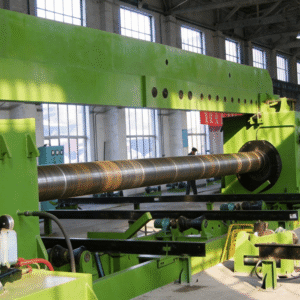
Formal OCTG hydrostatic testing must follow standardized and procedural operations to ensure test accuracy, repeatability, and compliance with API certification requirements. The entire workflow is divided into six standardized steps, compatible with manual, automatic, and maintenance three operating modes, adapting to mass production, precise detection, and equipment debugging scenarios respectively.
Step 1: Pre-Test Preparation and Pipe Inspection
Before testing, operators need to complete equipment self-inspection and pipe screening. Check the operating status of the testing machine’s hydraulic system, sealing components, sensors, and control system to ensure no faults or leakage. Meanwhile, inspect the appearance of OCTG pipes to remove obvious defective products such as severe deformation and surface damage. Confirm pipe parameters including pipe diameter, wall thickness, steel grade, and applicable standards (API 5CT or API 5L), and pre-set corresponding test pressure values and pressure holding time in the PLC system.
Step 2: Automatic Pipe Feeding and End Sealing
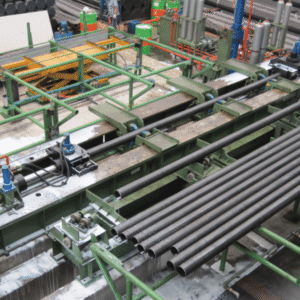
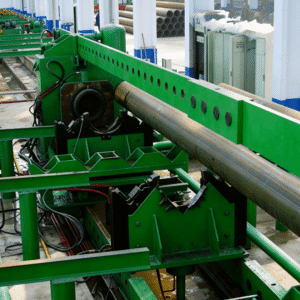
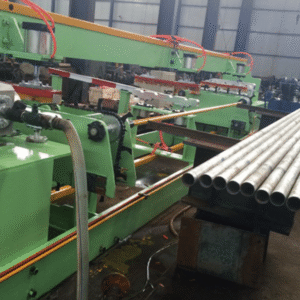
The equipment’s automatic feeding mechanism transports the OCTG pipe to the testing station, and the hydraulic clamping device quickly positions and fixes the pipe. The high-performance rubber sealing heads at both ends tightly seal the pipe orifice to ensure zero leakage during the pressure test. For special threaded pipes and thick-walled casing, the equipment supports customized sealing fixtures to adapt to different pipe specifications.
Step 3: Water Filling and Full Air Exhaustion
Clean filtered water is injected into the pipe body through the water supply system. Air inside the pipe is completely discharged during water filling, which is a key step to ensure test accuracy. Residual air will cause pressure compression and delay pressure stabilization, leading to inaccurate test results. The system will automatically detect the water filling status and stop water injection after confirming full water filling and zero residual air.
Step 4: Stepped Boosting and Constant Pressure Holding
The high-pressure booster pump starts to boost pressure in a stepped manner to avoid rapid pressure surge causing pipe damage or data deviation. The pressure rises steadily to the pre-set standard test pressure, then the system automatically switches to constant pressure holding mode. According to API standards, the pressure holding time ranges from 10 seconds to several minutes, varying with pipe specification and steel grade. During the pressure holding period, the system monitors pressure fluctuation in real time and eliminates system pressure loss interference through intelligent compensation.
Step 5: Pressure Detection and Result Judgment
After completing the standard pressure holding cycle, the system analyzes pressure change data. If the pressure remains stable within the allowable error range and no water leakage, seepage, or pipe deformation occurs on the pipe body, the product is judged qualified. If abnormal pressure drop or leakage defect is detected, the system automatically marks the unqualified pipe and records defect data, including pressure drop value and defect location.
Step 6: Pressure Relief, Water Drainage and Automatic Unloading
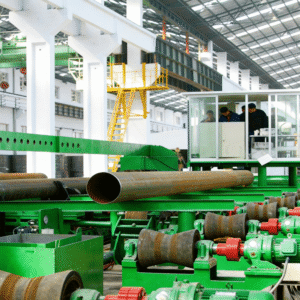
After the test is completed, the equipment performs controlled slow pressure relief to prevent pipe vibration and damage caused by instantaneous pressure release. Then the residual water in the pipe is drained quickly, and the hydraulic clamping device is released. The automatic unloading mechanism sends the tested pipe out of the testing station, completing a full test cycle. All test data is automatically stored and can generate API-standard test reports for product certification and customer inspection.
Professional Pressure Selection: High Pressure vs Standard Pressure
Pressure selection is the core parameter of OCTG hydrostatic testing, which directly affects test validity, production safety, and equipment service life. Many manufacturers confuse standard pressure and high-pressure test scenarios, leading to unqualified product certification or excessive equipment loss. Combined with API 5CT and API 5L standard specifications and actual OCTG production scenarios, we summarize clear pressure selection criteria for different working conditions.
Standard Pressure Test Scenarios (Conventional OCTG Products)
Standard pressure testing is applicable to most conventional-grade OCTG pipes for conventional oil and gas wells, which is the most widely used test condition in mass production. The test pressure is calculated strictly in accordance with the conventional working pressure specified by API standards, generally ranging from 10MPa to 35MPa.
Applicable product ranges:
- Conventional steel grade tubing and casing: J55, K55, N80-1, Grade B, X42, X52 and other common steel grades;
- Ordinary shallow and medium-depth oil and gas well pipes with low and medium working pressure requirements;
- API 5L standard conventional line pipes for surface oil and gas transmission;
- Mass-produced standard OCTG products without specialhigh-pressure resistance design;
Selection advantages: Standard pressure testing matches the conventional service environment of ordinary OCTG pipes, which can effectively verify basic structural integrity and leakage resistance. It features fast test cycle, low equipment load, low energy consumption, and high production efficiency, fully meeting the mass production and delivery needs of conventional petroleum pipes.
High Pressure Test Scenarios (High-End and Special OCTG Products)
High-pressure hydrostatic testing generally refers to test pressure above 40MPa, supporting a maximum test pressure of 180MPa or higher, which is aimed at high-strength, high-pressure-resistant OCTG products used in deep wells, ultra-deep wells, and high-pressure gas fields. API 5CT has clear mandatory high-pressure test requirements for high-grade steel pipes.
Applicable product ranges:
- High-strength steel grade OCTG pipes: N80-Q, L80, C90, T95, P110, Q125 and other premium steel grades;
- Thick-walled casing and high-pressure tubing for deep wells and ultra-deep oil and gas wells;
- High-pressure resistant line pipes for offshore oil and gas platforms and long-distance high-pressure transmission pipelines;
- OCTG products used in high-pressure, high-temperature and harsh downhole corrosive environments;
- Premium threaded pipes and high-precision coupling pipes requiring ultra-strict quality verification.
Selection necessity: High-grade OCTG products bear extreme downhole pressure far exceeding conventional pipes during service. Conventional standard pressure testing cannot simulate their actual working conditions, which will lead to missed detection of potential micro-defects. Only high-pressure testing can effectively verify the ultimate pressure resistance, structural stability and thread sealing performance of high-end OCTG products, ensuring compliance with international high-end petroleum engineering procurement standards.
Core Selection Principles and Equipment Matching Suggestions
First, follow standard priority: All pressure values must comply with the minimum test pressure requirements of API 5CT and API 5L, and cannot be reduced arbitrarily for production efficiency. Second, match product positioning: Ordinary civil and conventional oilfield pipes adopt standard pressure testing, while high-end engineering and deep well special pipes must adopt high-pressure testing. Third, consider production efficiency and equipment protection: Avoid using high-pressure equipment for conventional pipe testing for a long time, which will accelerate equipment wear and increase production costs; also avoid using standard pressure equipment for high-grade pipe testing, which will lead to unqualified test results and product quality risks.
Key Advantages of Professional OCTG Hydrostatic Testing Machine
A high-quality OCTG hydrostatic testing machine is not a simple pressure boosting device, but a professional intelligent detection system integrating precision control, automatic operation and data traceability. It has irreplaceable advantages for OCTG production quality control:
- High test accuracy and standard compliance: Adopt high-precision pressure sensors and PLC closed-loop control technology, with pressure control accuracy up to ±0.1MPa, fully meeting API 5CT and API 5L standard tolerance requirements, ensuring 100% qualified test data for certification.
- Three operating modes adapt to diverse scenarios: Equipped with Manual, Automatic and Maintenance modes. Automatic mode is suitable for mass continuous production, manual mode is used for special pipe specification debugging and re-inspection, and maintenance mode facilitates daily equipment debugging and fault detection, improving production flexibility.
- Wide pressure adaptation range: Support seamless switching between standard pressure and high-pressure testing, covering all specifications of OCTG pipes from conventional steel grades to high-end premium steel grades, meeting one-stop testing needs of diversified product lines.
- Intelligent data traceability: Automatically record all test parameters including boosting curve, holding pressure, pressure fluctuation and test time, support automatic report generation and data export, realizing full-process quality traceability.
- Strict safety protection: Equipped with over-pressure protection, pressure relief protection and emergency stop device, which can automatically cut off pressure and release pressure in case of abnormal conditions, ensuring zero safety accidents during high-pressure testing.
Conclusion
Hydrostatic testing is the last line of defense for OCTG product quality and safety, and the hydrostatic testing machine is the core equipment to realize standardized and efficient pressure detection. In the global petroleum pipe manufacturing industry, only by deeply mastering the equipment working principle, standardized operation workflow and scientific pressure selection rules can manufacturers produce OCTG products that meet API international standards, effectively reduce product failure rates, and enhance core market competitiveness.
Whether it is standard pressure testing for mass conventional OCTG pipes or high-pressure testing for high-strength deep-well pipes, selecting a matched professional hydrostatic testing machine and standardizing test operations are the key to stable product quality and smooth international certification. With the continuous upgrading of global oil and gas exploration technology, high-end high-pressure resistant OCTG products will become the mainstream of the market, and intelligent, high-precision, multi-pressure adaptive hydrostatic testing equipment will also become the standard configuration of modern OCTG production lines.
 English
  Español
  Русский
  العربية
  Français
  Português