
Overview
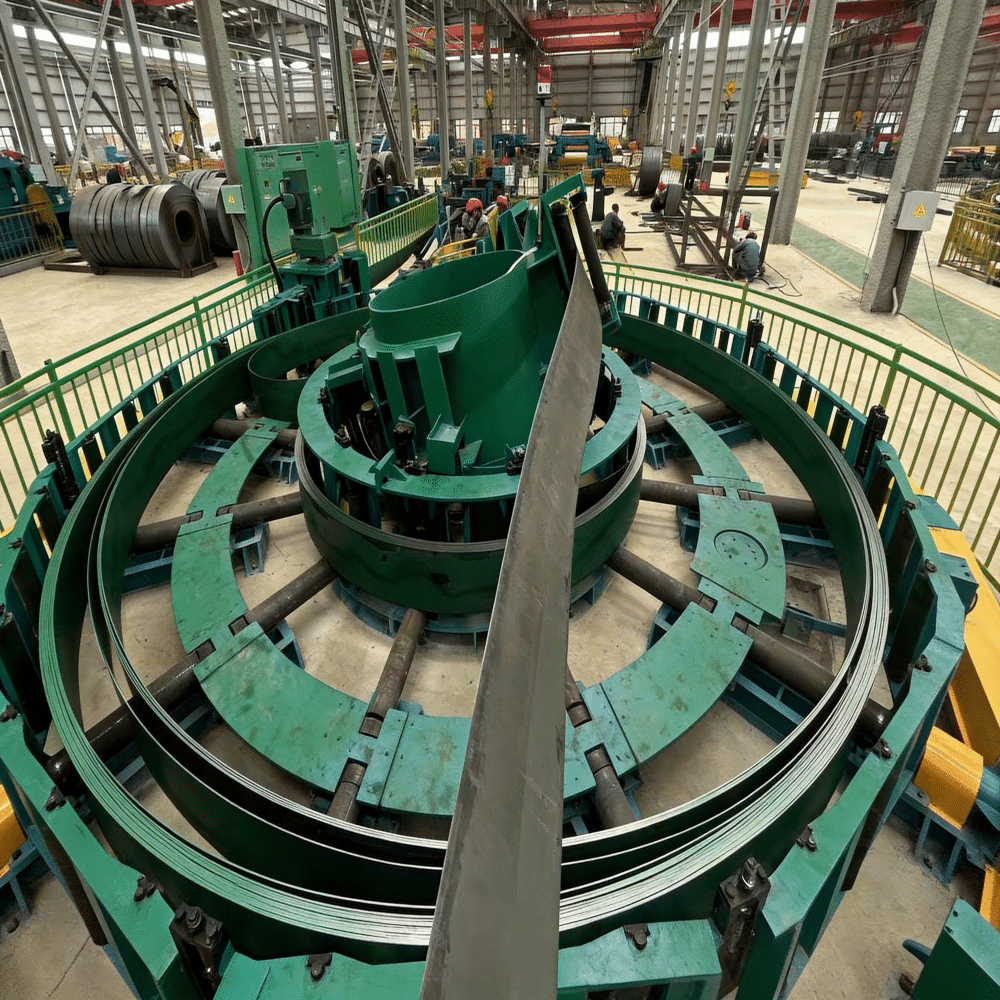
In a modern ERW tube mill line, continuous production is the core of high output and stable pipe quality. One major bottleneck in ERW pipe manufacturing comes from steel strip coil changeover. When one strip coil runs out, the line must stop for cutting, butt welding and new coil loading, which causes costly downtime, unstable weld seams and lower overall equipment efficiency (OEE). This is exactly where an ERW tube mill accumulator solves the problem.
An accumulator, also widely known as strip loop accumulator for ERW pipe mill, acts as a buffer storage to reserve a certain length of steel strip. During coil change, the mill keeps running continuously by consuming the stored strip inside the accumulator. After butt welding of two coils is finished, the accumulator refills strip material again for the next coil swap. Without a reliable accumulator, many high-speed continuous ERW tube mill lines cannot reach their designed production capacity.
This guide will break down the working principle, full operation workflow, common accumulator types, key selection criteria and frequent maintenance tips for accumulators used in high frequency welded pipe mill. It helps pipe mill owners, project engineers and procurement managers understand how to pick a suitable ERW mill strip accumulator for new line investment or old mill upgrade.
1. What is an Accumulator for ERW Tube Mill?
The ERW tube mill accumulator is a mechanical buffer device installed between the strip un-coiler section and the forming station of ERW pipe production line. Its main function is to store a long loop of hot rolled or cold rolled steel strip. It separates the intermittent coil change operation at un-coiler from the continuous forming & high-frequency welding process downstream.
In traditional ERW mills without accumulators, the whole line must halt every time coil ends meet. Each stop and restart creates defective pipe sections, wastes material and reduces hourly output. The loop accumulator stores enough strip reserve so downstream tube forming, HF welding, sizing and cutting can run non-stop while operators complete strip butt welding at the entry side.
Core benefits of installing ERW tube mill accumulator:
- Eliminate full line shutdown during steel strip coil change
- Improve continuous ERW tube production speed and daily output
- Reduce start-stop induced weld defects, scratches and pipe rejects
- Protect forming rolls, welding unit and cutting saw from frequent speed fluctuation
- Extend service life of ERW tube mill line and reduce maintenance cost
- Stabilize strip tension control for consistent pipe dimension tolerance

2. Working Principle of ERW Mill Strip Accumulator
The fundamental working principle of the tube mill loop accumulator is simple: store steel strip loop when line runs normally; release stored strip during coil changeover.
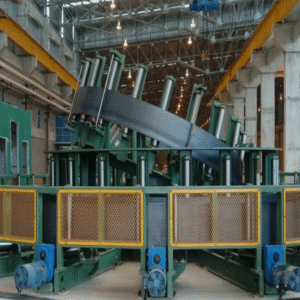
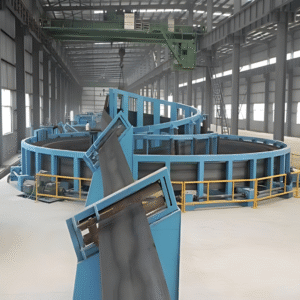
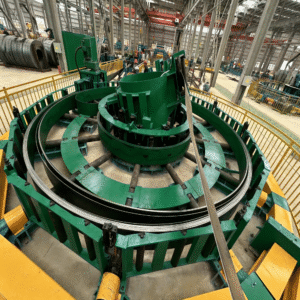
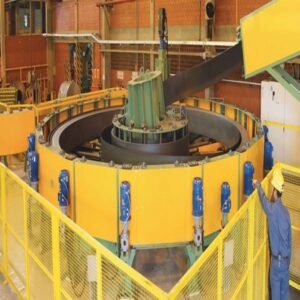
The accumulator frame is equipped with fixed rollers and movable trolley / carriage rollers. The steel strip passes through these rollers and forms a large free loop inside the accumulator chamber. The movable trolley can travel forward and backward on heavy-duty guide rails, driven by hydraulic or electric drive system.
Strip tension control logic
Tension is the most critical factor for ERW tube mill accumulator operation. The accumulator must maintain constant, stable strip tension all the time, no matter filling or releasing strip. Too low tension will lead to strip wrinkling, loop collapse, strip deviation and edge damage. Over-high tension causes strip elongation, edge cracking and even strip break, which will shut down the ERW tube line.
When the line runs in normal production:The incoming strip speed from un-coiler is slightly higher than the downstream forming speed. The extra strip pushes the movable trolley to move and build up the strip loop inside accumulator, storing strip reserve until the trolley reaches full storage limit.
When coil tail arrives and coil change starts:The un-coiler stops feeding strip. Now the downstream forming section continues running and pulls strip out from accumulator. The movable trolley moves back, releasing the stored loop strip. The ERW mill keeps running without pause during butt welding of new coil.
Once butt welding is completed and new coil feeds strip again, the accumulator starts re-filling strip loop for next coil swap cycle.
3. Full Operation Workflow of Accumulator in Continuous ERW Pipe Mill
The complete accumulator operation cycle can be divided into four phases: filling phase, full standby phase, strip releasing phase, reset & refill phase.
Phase 1: Normal running & accumulator filling
The un-coiler unwinds steel strip continuously. Strip passes through flattener, edge trimming unit and then enters the loop accumulator. The entry speed is set a little faster than exit speed toward forming section. The movable trolley travels and accumulates strip loop inside the accumulator frame. Tension system keeps strip flat and centered. This process continues until the accumulator reaches its maximum storage length.
Phase 2: Full storage standby
When accumulator is fully loaded with strip loop, entry speed automatically matches exit speed. The trolley stays at full stroke position, holding the reserved strip ready for coil change. The ERW tube mill maintains steady continuous pipe production. Operators monitor strip position, tension and trolley position via HMI.
Phase 3: Coil change & strip releasing
The coil tail sensor detects the end of current steel coil. The un-coiler stops unwinding. The downstream forming, HF welding, sizing process keeps running at constant speed, pulling strip out of accumulator. The movable trolley travels backward, releasing stored strip loop. During this period, operators cut the old coil tail, feed new coil, align strip ends and complete butt welding.
The accumulator’s total strip storage length defines the maximum available time window for operators to finish butt welding. Longer storage means more operation time and lower operation pressure for workers.
Phase 4: Weld finished, reset and refill
After butt weld inspection passes, un-coiler restarts unwinding strip. The entry speed increases again, pushing trolley forward and rebuilding strip loop inside accumulator until full storage status. The whole cycle repeats for next coil change.
Key points during workflow: strip centering control is essential. Side guides or automatic edge position control (EPC) are usually equipped together with ERW tube mill accumulator to prevent strip wandering, edge scratch and loop twisting.

4. Main Types of Accumulator Used in ERW Tube Mill Line
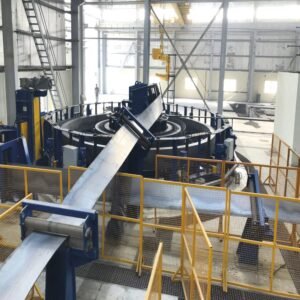
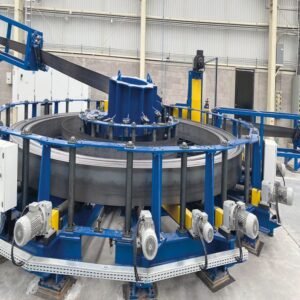
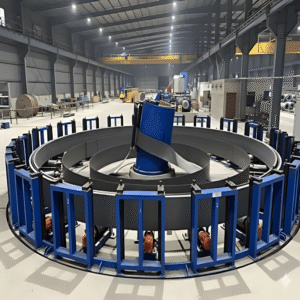
There are three mainstream types of strip loop accumulator for ERW pipe mill: horizontal loop accumulator, vertical accumulator (also known as tower accumulator) and carousel / multi-loop accumulator. Each type fits different line layout, strip width, material thickness and factory space.
4.1 Horizontal Loop Accumulator
Horizontal accumulator is the most widely adopted ERW mill strip accumulator for medium and large ERW tube mill lines. The movable trolley travels horizontally along long guide rails on factory floor. Steel strip forms horizontal loops inside the accumulator pit or frame.
Advantages:
- Simple mechanical structure, easy installation and daily inspection
- Suitable for wide strip and thick carbon steel strip used for large diameter ERW pipe
- Convenient maintenance of rollers, hydraulic cylinder and tension system
- Lower height requirement, no need for high factory workshop roof
- Stable operation for heavy strip load
Disadvantages:
- Occupies longer floor space along the tube mill line
- Requires flat foundation and heavy rail base
Best application: ERW pipe mill producing 114mm ~ 610mm O.D. steel pipe, carbon steel, low alloy steel, medium to heavy strip thickness.
4.2 Vertical Tower Accumulator
Vertical accumulator stores strip loop vertically up and down inside a tall tower frame. The strip loops hang vertically instead of horizontal movement.
Advantages:
- Saves floor space, ideal for factories with limited workshop length
- Compact layout for medium speed small & medium diameter ERW tube mill
Disadvantages:
- Higher workshop height required
- Harder roller maintenance; strip sway risk for wide heavy strip
- Limited maximum storage length compared with horizontal model
Best application: Small and medium ERW tube mill, narrow strip, limited plant length, high speed thin wall pipe production.
4.3 Multi-loop / Carousel Accumulator
Multi-loop accumulator uses multiple sets of rollers to form several strip loops at the same time, greatly increasing strip storage capacity within limited space.
Advantages:
- Large strip storage capacity in compact footprint
- Longer available operation time for coil change
Disadvantages:
- Complex mechanical structure, higher investment cost
- Higher requirement on EPC and tension control system; higher maintenance skill requirement
Best application: High speed heavy-duty continuous ERW tube production line for large output factories.
5. How to Select Right ERW Tube Mill Accumulator: Key Selection Factors
Choosing a proper tube mill loop accumulator directly affects line uptime and investment return. Buyers should evaluate these critical parameters before purchasing strip loop accumulator for pipe making line.
5.1 Required strip storage length
This is the first parameter. Calculate the time needed for coil tail cutting, strip alignment, butt welding and weld inspection. Multiply the downstream forming line speed by operation time to get required storage length.
Formula: Storage length = Line running speed × coil change operation time.
If your coil change and welding takes 90 seconds and mill speed is 30 m/min, required strip reserve = 45 meters. You need to select accumulator with storage length 10%~20% extra margin to avoid risk.
5.2 Strip specification: width, thickness & material grade
The accumulator roller diameter, roller spacing, trolley load capacity must match your strip range.
- Thicker, high tensile strength steel strip requires heavier trolley structure, stronger hydraulic drive and higher tension capacity
- Wide strip needs longer roller to avoid edge bending
- For high strength steel, surface coating rollers are recommended to prevent strip scratch
5.3 Available factory layout & space
Check your workshop length, ceiling height and foundation condition.
- Long available floor → horizontal accumulator preferred
- Limited floor length but high roof → vertical tower accumulator
- Compact space and long storage demand → multi-loop accumulator
5.4 Drive system: hydraulic drive vs electric drive
Two common drive types for ERW tube mill accumulator trolley: hydraulic drive and servo electric drive.Hydraulic drive: high thrust, suitable for heavy load, thick & wide steel strip, lower equipment cost. Need regular hydraulic oil maintenance.Servo electric drive: precise speed & tension control, cleaner system, less oil leakage risk, better for high speed thin strip lines, higher initial investment.
5.5 Tension control & EPC system
Never ignore tension and edge position control. Poor tension will cause loop collapse or strip break. Automatic EPC (edge position control) keeps strip centered inside accumulator, reducing strip edge damage. For high-end continuous ERW tube production, closed-loop tension control with HMI monitoring is strongly recommended.
5.6 Line speed and pipe diameter range
High-speed ERW mill needs accumulator with fast trolley response and stable dynamic tension. Large O.D. pipe lines use heavier strip; trolley load capacity must be overrated with safety factor.
5.7 Budget, after-sales and spare parts supply
Compare total cost including installation, commissioning, training and spare parts availability. Choose manufacturers with rich ERW tube mill project experience, not only simple accumulator machine makers.


6. Common Troubles & Maintenance Tips for ERW Tube Mill Accumulator
Even high-quality strip loop accumulator needs regular maintenance to avoid unexpected breakdown and impact continuous ERW tube production.
- Strip deviation / wandering: usually caused by misaligned rollers, worn roller surface or failed EPC sensor. Check roller parallelism and calibrate EPC regularly.
- Strip wrinkling: insufficient or unstable strip tension. Recalibrate tension control parameters.
- Loop collapse: sudden tension drop, strip slippery on rollers. Clean roller surface, check tension sensor.
- Trolley vibration and abnormal noise: worn rail, damaged guide slider, loose bolt. Lubricate rails and slider periodically.
- Hydraulic leakage (hydraulic type): inspect oil seal, pipe fitting, replace aging seals.
Suggested daily maintenance checklist: roller surface inspection, tension value log, EPC sensor cleaning, rail lubrication. Weekly check trolley fixing bolts, drive system and limit position switches.
Conclusion
The accumulator is an indispensable core auxiliary machine of modern ERW tube mill line. Its job to store steel strip loop enables truly continuous ERW tube production, removes downtime during coil change and improves pipe quality and production yield.
We have covered the working principle, complete operation workflow, three main accumulator types and critical selection criteria for ERW mill strip accumulator. Horizontal, vertical and multi-loop accumulator each has its own suitable working scenario. When selecting your tube mill loop accumulator, always start from your required storage length, strip material parameters, workshop layout and line running speed.
A well-matched strip loop accumulator can maximize your ERW pipe mill OEE, reduce scrap rate and bring long-term profit for your pipe manufacturing plant. If you plan to upgrade your existing high frequency welded pipe mill or invest in new ERW tube mill line, contact our engineering team for customized accumulator technical proposal and layout drawing.
 English
 Español
 Русский
 العربية
 Français
 Português