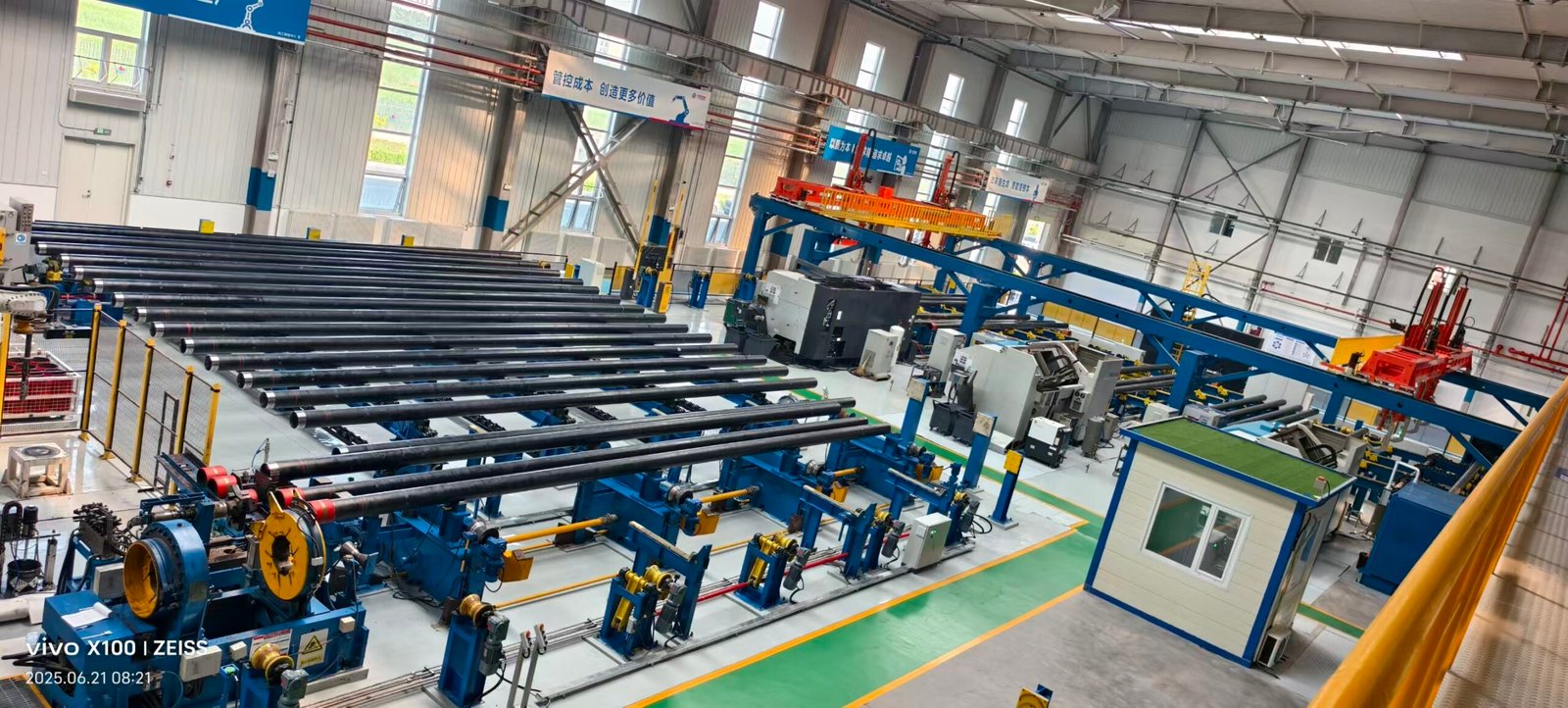
Overview of API 5CT & API 5B Standards for OCTG Production
Before diving into the production line workflow, it is essential to clarify the core constraints of API 5CT y API 5B standards, as they define every operational parameter of OCTG manufacturing. API 5CT is the fundamental manufacturing standard for OCTG casing and tubing, regulating steel grade chemical composition, mechanical properties (tensile strength, yield strength, hardness), wall thickness tolerance, outer diameter precision, heat treatment requirements, and hydrostatic pressure resistance. It classifies OCTG pipes into multiple steel grades such as J55, K55, N80, P110, and Q125, each with strict performance thresholds for oilfield service.
API 5B, on the other hand, focuses exclusively on thread manufacturing precision, which is the core of OCTG pipe connection reliability. This standard specifies thread profile, pitch, taper, thread height tolerance, and coupling matching accuracy for all OCTG threaded ends. Poor thread processing that fails API 5B compliance will cause thread leakage, connection loosening, or pipe breakage under downhole pressure, leading to severe oilfield safety accidents. Therefore, a qualified API 5CT & API 5B compliant OCTG production line must achieve dual compliance in pipe body performance and thread precision throughout the entire process.
Core Equipment Configuration of a Standard OCTG Production Line
A full-set OCTG production line that meets API industry standards consists of integrated equipment covering raw material processing, pipe forming, heat treatment, precision machining, quality testing, and finished product finishing. Every device is customized to meet API 5CT and API 5B tolerance and performance requirements. Below are the indispensable core equipment units:
1. Raw Material Preprocessing & Heating Equipment
The foundation of high-quality OCTG pipes is qualified steel billets. Key equipment includes steel billet inspection benches, rotary heating furnaces, and temperature uniformity control systems. The rotary heating furnace is designed to heat carbon steel and alloy steel billets to a precise rolling temperature range (1100–1250°C) with uniform temperature distribution, which eliminates internal stress and ensures the pipe body’s mechanical properties meet API 5CT steel grade standards. Real-time temperature monitoring systems avoid overheating or underheating, preventing unqualified tensile and yield strength indicators.
2. Pipe Forming & Sizing Equipment
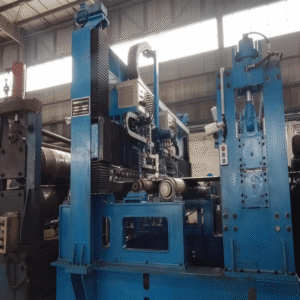
This unit includes piercing mills, continuous rolling mills, sizing mills, and straightening machines, applicable for seamless OCTG pipe production (the mainstream process for high-standard API OCTG products). The piercing mill processes heated solid steel billets into hollow pipe shells, while the continuous rolling mill precisely controls wall thickness uniformity. The sizing mill calibrates the pipe outer diameter to strictly follow API 5CT dimensional tolerance limits. The heavy-duty straightening machine corrects pipe body bending deformation, ensuring the straightness index meets standard requirements for downhole installation.
3. Heat Treatment System
Heat treatment is the key process to achieve API 5CT mechanical property compliance, including quenching and tempering furnaces and rapid cooling systems. Different API steel grades require targeted heat treatment processes: P110 and Q125 high-strength OCTG pipes must undergo integral quenching and high-temperature tempering to obtain stable toughness and strength. The automated heat treatment system controls heating time, cooling rate, and temperature holding accuracy to eliminate internal structural defects and ensure consistent mechanical performance of each pipe batch.
4. API 5B Standard Thread Processing Equipment
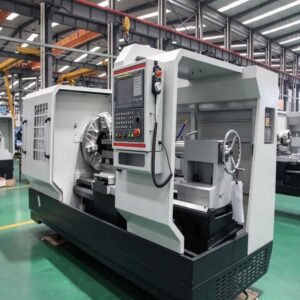
As the core equipment for API 5B compliance, CNC OCTG thread lathes and thread trimming machines are specially designed for oil pipe thread machining. Different from ordinary pipe threading equipment, these CNC lathes support standard API thread profiles (including round threads and buttress threads) with micron-level precision control. They accurately control thread taper, pitch error, and tooth height to fully comply with API 5B tolerance standards, ensuring perfect matching between pipes and couplings.
5. Professional Quality Testing Equipment
Full-range testing equipment guarantees 100% API standard compliance, covering hydrostatic testing machines, ultrasonic non-destructive testing (UT) equipment, magnetic particle testing (MT) machines, mechanical property testers, and API thread gauges. The hydrostatic tester simulates downhole high-pressure environments to verify the pipe’s pressure resistance per API 5CT requirements. NDT equipment detects internal and surface cracks, inclusions, and structural defects, while professional API thread gauges calibrate thread precision to eliminate unqualified threaded products.
6. Finishing & Packaging Equipment
This unit includes pipe end cutting machines, deburring devices, anti-corrosion coating systems, marking machines, and automatic packaging machines. It ensures finished OCTG pipes have smooth end faces, standardized anti-corrosion protection, clear API standard marking, and intact packaging for long-distance transportation and on-site storage.


Complete Workflow & Operating Principle of API Compliant OCTG Production Line
The entire OCTG manufacturing process follows a closed-loop quality control logic, with each process linked tightly and inspected layer by layer to meet dual API 5CT and API 5B standards. The full workflow is divided into six core stages, with detailed operating principles explained below:
Stage 1: Raw Material Inspection & Heating
The production starts with strict incoming inspection of steel billets. Operators test the chemical composition and original mechanical properties of raw materials to ensure they match the designated API 5CT steel grade, eliminating unqualified billets in advance. Qualified billets are sent to the rotary heating furnace for uniform heating. The furnace’s constant-temperature working zone ensures each billet is heated evenly, avoiding local hardness inconsistency. This step lays a foundation for defect-free pipe forming and stable mechanical properties.
Stage 2: Piercing, Rolling & Sizing Forming
After heating, the solid steel billet is sent to the piercing mill, which uses rotary piercing technology to process the billet into a uniform hollow pipe shell. The pipe shell then enters the continuous rolling mill for wall thickness refinement, which precisely controls the pipe wall thickness error within API 5CT allowable ranges. Subsequently, the sizing mill calibrates the pipe outer diameter and roundness, eliminating dimensional deviation generated during rolling. Finally, the straightening machine corrects pipe body bending to ensure the pipe meets the straightness requirements for oilfield downhole use. After forming, the pipes are naturally cooled to room temperature for subsequent heat treatment.
Stage 3: Precision Heat Treatment for Performance Optimization
Formed OCTG pipes often have unstable internal structures and inconsistent hardness, which cannot meet API 5CT mechanical property standards. The automated heat treatment system performs integral quenching and tempering according to different steel grade parameters. Quenching improves pipe body strength and hardness, while tempering eliminates quenching stress and enhances pipe toughness and fatigue resistance. The whole process adopts closed-loop temperature control, ensuring batch consistency of pipe mechanical properties and avoiding performance fluctuations that fail API standard thresholds.
Stage 4: Pipe End Machining & API 5B Thread Processing
This is the most critical link to meet Normas de roscado API 5B. First, the pipe ends are cut flat and deburred to ensure verticality and smoothness of the end face. Then, qualified pipes are sent to high-precision CNC thread lathes for threaded machining. The equipment is pre-programmed with standard API thread parameters, including 1:16 taper, standard pitch, and tooth profile dimensions. During processing, the system monitors thread tolerance in real time, and after machining, professional API thread ring gauges and plug gauges are used for 100% inspection. Only threads that fully meet API 5B precision requirements can enter the next process, ensuring zero leakage of pipe connections.
Stage 5: Full Standard Compliance Testing
All finished semi-finished pipes must pass comprehensive API standard testing before delivery. First, hydrostatic pressure testing is conducted: the pipe is sealed at both ends and filled with high-pressure water to maintain the standard-specified pressure for a fixed duration. No leakage or deformation indicates compliance with API 5CT pressure resistance requirements. Next, ultrasonic non-destructive testing detects internal defects such as cracks and delaminations, while magnetic particle testing checks surface micro-defects. Finally, sampling tests for tensile strength, yield strength, and hardness are performed to verify full compliance with steel grade standards. Unqualified products are marked and isolated for rework or scrapping.
Stage 6: Finishing, Marking & Packaging
Qualified OCTG pipes undergo anti-corrosion treatment, including surface cleaning and protective coating spraying, to adapt to harsh oilfield environments. Then, standard API marking (including steel grade, standard number, production batch, and dimensional parameters) is printed on the pipe surface as traceability certification. Finally, pipes are equipped with standard couplings, protected by thread protectors, and automatically packaged for delivery. The finished products fully meet international API standard delivery requirements and are applicable for global oil and gas drilling, completion, and production projects.
Why API 5CT & API 5B Compliance Matters for OCTG Production Lines
Many pipe manufacturers ignore the synergy of API 5CT and API 5B standards, resulting in unqualified OCTG products with qualified pipe bodies but substandard threads, or qualified dimensions but unqualified mechanical properties. In actual oilfield operations, non-compliant OCTG pipes will face severe risks: thread mismatch causes connection leakage, insufficient mechanical strength leads to pipe rupture under high pressure, and unstable product quality causes frequent downhole failures, increasing project costs and safety hazards.
Un profesional API 5CT and API 5B certified OCTG production line achieves full-process standard control from raw material selection, forming, heat treatment, and thread processing to finished product testing. It ensures that every batch of casing and tubing meets international oilfield construction standards, with stable pressure resistance, precise connection performance, and excellent durability. This is the core reason why standard-compliant OCTG production lines are favored by global oil and gas engineering projects.
Conclusión
To sum up, a high-standard OCTG production line is a systematic intelligent manufacturing system centered on API 5CT performance specifications y API 5B thread precision standards. Its complete equipment configuration and standardized workflow ensure the dimensional accuracy, mechanical stability, and connection reliability of oil country tubular goods. For oilfield equipment purchasers, manufacturers, and engineering technicians, understanding the operating principle and process specifications of API-compliant OCTG production lines is crucial for selecting high-quality casing and tubing products and ensuring the safe and efficient operation of oil and gas projects.
With the upgrading of global oilfield development technology, API 5CT and API 5B standards are continuously optimized. Modern OCTG production lines are also developing towards higher precision, higher automation, and stricter quality control, providing more reliable tubular support for deep well, ultra-deep well, and high-corrosion oilfield operations.
 English
 Español
 Русский
 العربية
 Français
 Português