Présentation générale
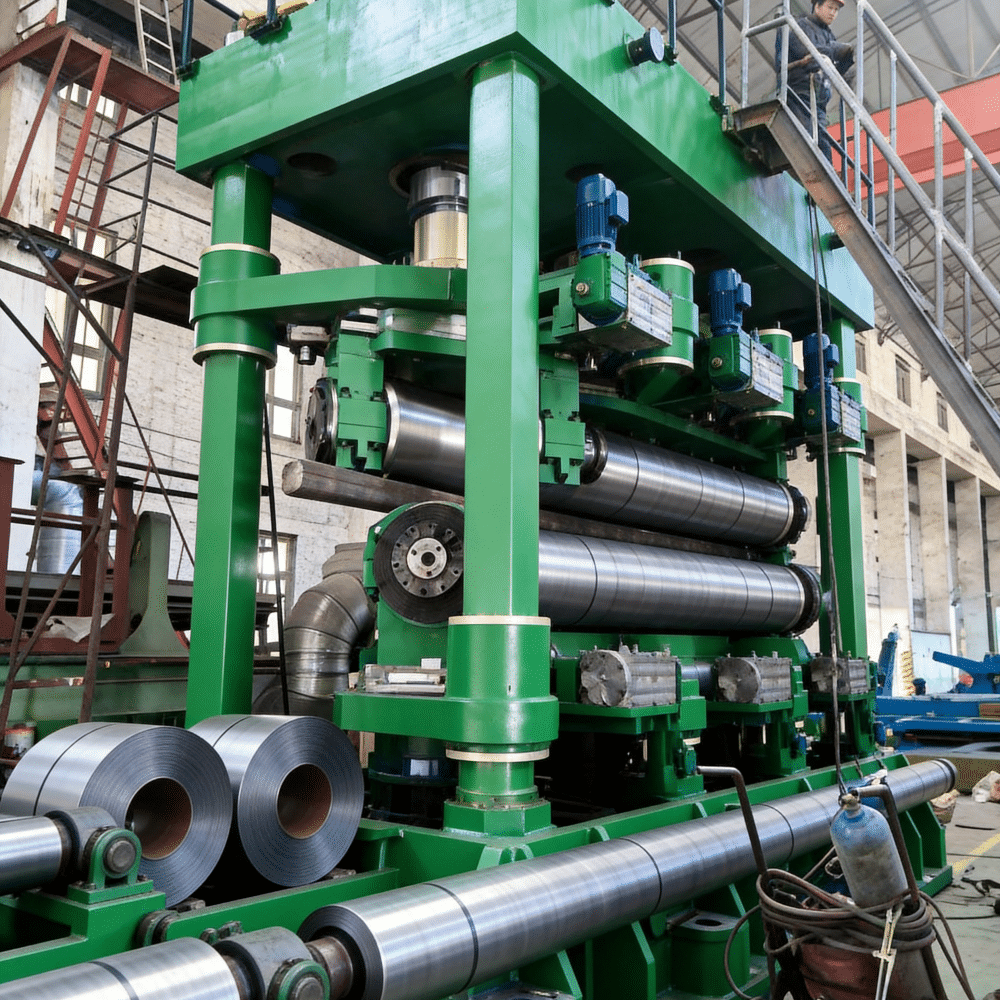
In modern steel tube manufacturing, steel pipe straightening machine, also widely known as pipe straightener, is an indispensable finishing equipment in seamless steel pipe, ERW welded tube and OCTG production lines. After hot rolling, heat treatment, cooling and transportation, steel pipes will generate complex bending deformation and residual internal stress. Unstraight pipes will seriously affect subsequent processes such as threading, hydrostatic testing, nondestructive testing and final product delivery. Poor straightness causes thread processing errors, unstable pressure test results, accelerated tool wear, and even disqualification of API-standard oil country tubular goods.
High-performance tube straightening equipment eliminates multi-directional bending, redistributes residual stress, and ensures pipe straightness meets API 5CT, ISO and other international standards. Whether you operate a new tube mill, upgrade existing pipe finishing line, or source replacement industrial straightener for OCTG casing, drill pipe and heavy-wall alloy pipe, understanding straightening principle, machine categories and application scenarios helps you make correct equipment investment decisions. This article covers core working mechanism, mainstream straightening machine types, critical performance differences and real-world production line applications for steel pipe manufacturers worldwide.
Working Principle of Steel Pipe Straightening Machine
The core physical principle of pipe straightening is repeated elastic-plastic alternating bending. Steel pipe has elastic deformation range and plastic deformation threshold. When external pressure exceeds material yield strength, permanent shape correction takes place.
During operation, the steel pipe is fed into the straightening station. Under the combined action of multiple groups of offset-arranged rollers or hydraulic pressing mechanism, the pipe bears continuous alternating bending force in multiple directions. Local convex bends are bent backward beyond yield point; when external load disappears, partial elastic spring-back occurs, while plastic deformation retains correction effect. After multiple cycles of reverse bending, irregular curvature in different directions is gradually eliminated. Meanwhile, uneven residual stress generated in hot rolling and heat treatment is redistributed and partially released, so the finished pipe maintains stable straightness after leaving the machine.
Key influencing factors for final straightening quality include pipe outer diameter, wall-thickness ratio, material yield strength (carbon steel, alloy steel, stainless steel), initial bending degree, roller quantity, roller gap adjustment, feeding speed and machine rigidity. For high-strength OCTG steel grades such as P110 and Q125, higher pressing force and multi-pass straightening are required to offset strong spring-back effect.
Modern automatic CNC pipe straightening machine integrates servo adjustment system, real-time straightness detection and parameter memory function. Operators input pipe specification, material grade and target straightness; the system automatically adjusts roller angle, gap and feeding speed, greatly reducing manual debugging error and improving batch consistency for mass tube production.

Main Types of Steel Pipe Straightening Machines
According to structural design, straightening mechanism and force application mode, industrial pipe straighteners are mainly divided into multi-roll straightening machine, two-roll hyperbolic straightening machine, hydraulic press straightening machine (spot-pressure straightener) and rotary head straightening machine. Each category owns unique structural features, precision level, production capacity and suitable processing scope for different steel pipe products.
1. Multi-Roll Straightening Machine (6-roll, 8-roll, 10-roll, 13-roll pipe straightener)
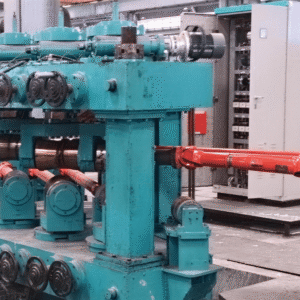
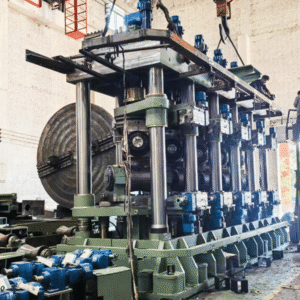
Multi-roll straightening machine is the most widely-adopted continuous straightening equipment for large-scale steel pipe production lines, also named cross-roll straightener. Straightening rollers are arranged in two staggered upper-and-lower rows, with hyperbolic roller profile fitting outer surface of round steel pipe.
Working flow: Steel pipe is continuously fed forward, driven by rotating rollers. The offset roller groups generate repeated multi-directional alternating bending. One-pass continuous processing completes straightening for long pipes. More rollers mean more bending cycles, better straightness accuracy and more uniform stress release. Common configurations include 6-roll, 8-roll, 10-roll and 13-roll models.
Avantages: High continuous production efficiency, high feeding speed, suitable for inline connection with seamless pipe mill, ERW tube production line and finishing line; good surface protection; stable performance for mass production; compatible with carbon steel, alloy steel and stainless steel pipes.
Limitations: Limited correction capacity for pipes with extremely large local bending; heavy-wall ultra-large diameter OCTG needs higher machine rigidity configuration; equipment footprint is relatively large.
Typical applications: Seamless carbon steel pipe, ERW welded steel tube, medium-diameter casing and tubing, general-purpose pipeline steel pipe. Widely installed in tube mills for mass continuous production.
2. Two-Roll Hyperbolic Straightening Machine
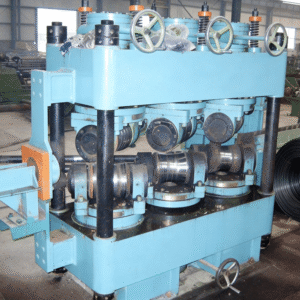
Two-roll straightening machine adopts two large hyperbolic tapered rollers. By adjusting the installation angle between two rollers, the pipe generates spiral forward motion when passing through the roller gap. The whole pipe body obtains 360-degree circumferential alternating bending correction.
Compared with multi-roll units, two-roll structure has fewer rollers, simpler mechanical structure and lower investment cost.
Avantages: Compact layout, lower equipment cost, convenient roller replacement, flexible adjustment for a wide range of pipe outer diameter.
Limitations: Slightly lower straightening accuracy than multi roll straightener; not ideal for heavy-wall high-strength OCTG; usually applied as rough straightening or auxiliary finishing equipment.
Typical applications: Small-and-medium diameter seamless pipe, bar material, stainless steel thin-wall tube; small-and-medium capacity steel pipe factories.
3. Hydraulic Press Straightening Machine (Spot-Pressure Straightener / Ram-type Straightener)
Hydraulic press straightening machine belongs to intermittent spot-correction equipment. The bent position of steel pipe is positioned under hydraulic ram; high-pressure hydraulic cylinder applies concentrated pressing force aiming at local bending point to produce plastic deformation and eliminate single point bend.
This is discontinuous batch processing instead of continuous through-feed production. Operators or detecting sensors locate bending points one by one, perform pressing correction, and re-check straightness after each operation.
Avantages: Extremely large pressing force; excellent correction effect for severe local bending; suitable for large-diameter, heavy-wall, high-strength drill pipe and OCTG casing which are difficult to process by roller straightener; can repair deformed finished pipes.
Limitations: Low production efficiency, manual intensive, cannot match high-speed continuous production line; high dependence on operator experience; not suitable for mass high-volume production.
Typical applications: Large-size heavy-wall OCTG, drill pipe, heavy alloy steel pipe, post-heat-treatment deformed pipe repair, rework of non-conforming pipes.
4. Rotary-Head Straightening Machine
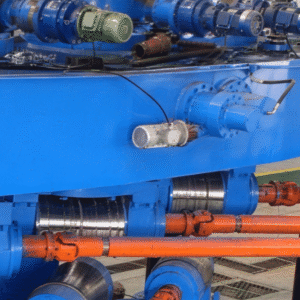
Rotary-head straightening machine is also called rotating die straightener. The straightening head carries multiple groups of straightening blocks and rotates at high-speed around the steel pipe axis. While the pipe moves linearly forward, the rotating head applies periodic multi-directional bending force to realize circumferential uniform correction.
Avantages: Very high straightening precision, good performance for small-diameter thin-wall precision tubes; small footprint.
Limitations: Restricted for small-diameter range; high requirement for tooling maintenance; not fit for large-size heavy-wall oil pipes.
Typical applications: Precision instrument tube, small-diameter stainless steel tube, automotive hydraulic tubing, high-precision thin-wall round bar.
Key Differences Between Different Steel Pipe Straightening Machines
Selecting proper pipe straightener directly influences production capacity, product yield and overall investment return. The comparison table below summarizes core differences from working mode, straightness accuracy, production capacity, applicable pipe specification and typical end-products.
Critical notes for equipment selection:
1.For main production line of OCTG casing and tubing according to API 5CT standard, multi-roll straightening machine is the mainstream primary straightening equipment. Configure hydraulic press straightener as auxiliary rework station for heavily bent pipes.
2.Small-diameter thin-wall stainless steel precision pipe can choose two-roll or rotary head straightener according to required tolerance.
3.Large-diameter heavy-wall drill pipe often needs combined process: rough multi-roll straightening plus final hydraulic spot-pressure correction.
Real-World Industrial Applications in Steel Tube Production Lines
1. Seamless Steel Pipe Production Line
After hot piercing, rolling and cooling, seamless steel pipes produce overall bending. Multi-roll straightening machine is installed before finishing processes such as sizing, nondestructive inspection and threading. Straightness after straightening guarantees normal operation of subsequent nondestructive testing devices and improves threading tool service life.
2. ERW Welded Tube Production Line
Weld residual stress and cooling deformation cause pipe bending. Inline multi-roll straightener completes correction right after welding and sizing, improving finished pipe dimensional consistency for structural steel pipe, pipeline transportation tube.
3. OCTG Casing & Tubing Production Line (Oil Country Tubular Goods)
This is one of the most demanding application scenarios for pipe straightening machine. Before CNC threading machine and hydrostatic testing machine, OCTG pipes must achieve strict straightness requirement. Bent pipe will cause thread pitch error, damage API thread quality, and even lead to inaccurate hydrostatic pressure test data. Most OCTG manufacturers adopt 8-roll /10-roll heavy-duty straightener as core equipment, matching hydraulic press straightener for reworking heavy-wall casing and drill pipe.
4. Precision Stainless Steel & Alloy Tube Manufacturing
Heat-exchanger tubes, instrument tubes and automotive hydraulic tubes pursue ultra-high straightness. Two-roll or rotary-head straightening machines are widely used to satisfy strict tolerance requirements for high-end precision tubes.
5. Pipe Rework & Repair Workshop
Hydraulic press straightening machine is the core equipment for repairing deformed pipes after heat-treatment, transportation or handling damage, reducing scrap rate of high-value alloy steel and OCTG products.
Common Troubleshooting & Practical Selection Tips
Many manufacturers encounter poor straightening quality after purchasing straightening equipment. Typical problems include residual periodic bending, surface indentation, insufficient correction for high-strength steel grades. Major causes include unreasonable roller profile, improper gap adjustment, insufficient machine rigidity, unsuitable feeding speed and severe roller wear.
Selection suggestions for global buyers:
1.Confirm maximum and minimum pipe outer diameter, wall-thickness range, maximum material yield strength and target straightness tolerance before quoting.
2.Distinguish primary inline production equipment and offline rework equipment: do not use hydraulic press straightener to undertake high-volume continuous production tasks.
3.For API OCTG projects, prioritize heavy-duty multi-roll straightener with high-rigidity frame and servo automatic adjustment function.
4.Spare-parts availability (straightening rollers, bearings, sealing components) and local after-sales support should be taken into account for overseas project deployment.
 English
 Español
 Русский
 العربية
 Français
 Português